
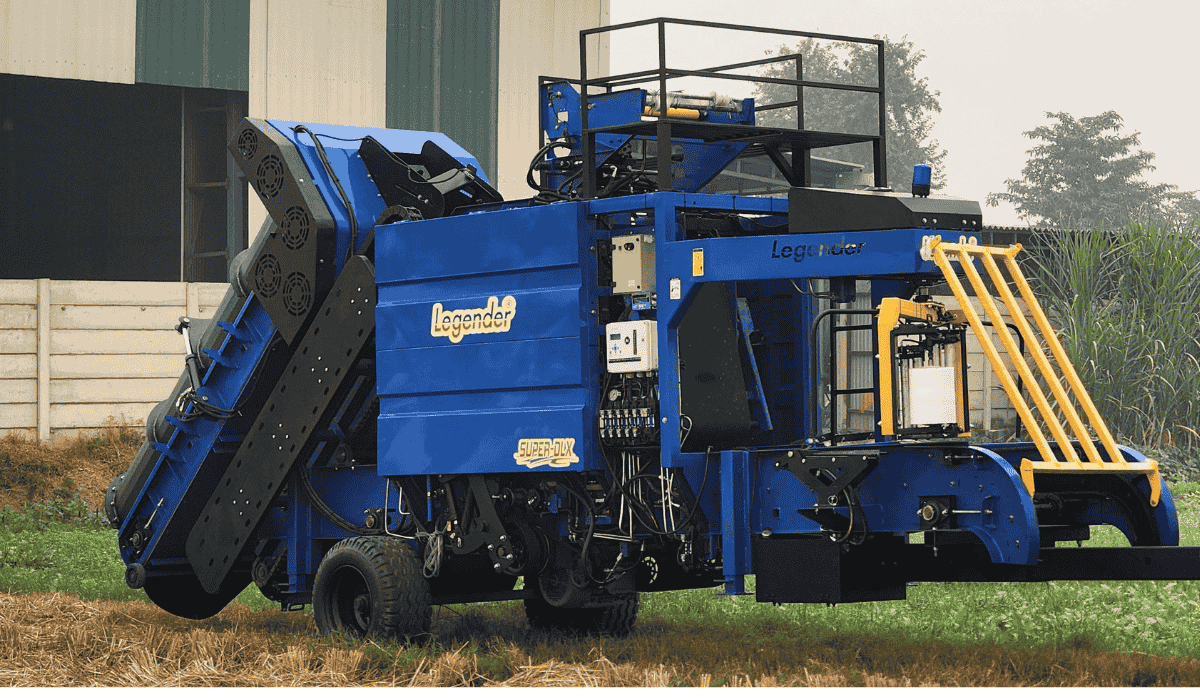
For years, silage preparation in many Indian farms depended heavily on manual labor. The process was slow, inconsistent, physically demanding, and difficult to manage during peak harvesting seasons. As labor costs continue to rise and farming operations become increasingly larger, many farmers are now turning to automation.
One machine that is rapidly changing fodder management across India is the Fully Automatic Silage Baler.
Modern farmers are no longer looking for temporary solutions. They want faster operations, reduced wastage, better silage quality, and machinery that can handle large-scale daily production without constant manual involvement.
That is exactly why fully automatic silage balers are becoming an essential part of modern dairy and agricultural operations.
What Is a Fully Automatic Silage Baler?
A fully automatic silage baler is an agricultural machine designed to compress, pack, and wrap green fodder into compact airtight bales. These bales help preserve nutrition for long periods and improve feeding efficiency for dairy farms.
Unlike semi-automatic systems, fully automatic machines reduce manual handling significantly. The entire process — from compression to wrapping — is handled through an automated workflow.
This helps farmers save time, labor, and operational costs.
Major Problems Farmers Face With Manual Silage Packing
Many farms still use traditional methods for fodder storage and silage preparation. While these methods may work on a small scale, they create serious challenges for medium and large-scale farming operations.
Some common issues include:
During harvesting season, these problems become even more difficult to manage because time-sensitive fodder needs immediate processing.
Why Automation Is Becoming Necessary
Agriculture is changing rapidly in India. Dairy farms are growing larger, labor availability is becoming unpredictable, and operational efficiency matters more than ever.

Fully automatic silage balers help solve multiple operational challenges at once.
1. Reduced Manual Labor
One of the biggest advantages is labor reduction. Farmers no longer need large teams to manage silage packing manually.
Automation helps complete the process faster with fewer workers.
2. Better Silage Quality
Proper compression and airtight wrapping improve fermentation quality and preserve nutritional value.
Consistent bale density also improves storage performance.
3. Faster Processing Speed
Modern silage balers can handle continuous operation efficiently, making them ideal for commercial dairy farms and large agricultural operations.
4. Lower Fodder Wastage
Poorly packed silage often leads to spoilage and moisture damage. Automated systems help reduce these losses significantly.
5. Improved Storage and Transportation
Compact wrapped bales are easier to stack, transport, and manage compared to loose fodder storage systems.
Choosing the Right Silage Baler Manufacturer
Not all machinery offers the same long-term performance. Before investing in a fully automatic silage baler, farmers should evaluate several important factors.
Machine Build Quality
Heavy-duty construction is critical for continuous operation in Indian farming conditions.
Automation Reliability
The machine should deliver stable performance with minimal interruption.
Service Support
Quick spare parts availability and technical support are extremely important for reducing downtime.
Production Capacity
Different farms require different bale output capacities. The machine should match operational requirements.
Wrapping Efficiency
Good wrapping quality directly affects silage preservation.
The Future of Modern Farming
Automation is no longer limited to large industrial operations. Indian agriculture is steadily moving toward smarter and more efficient machinery solutions.
Farmers today are focusing on:

- higher productivity
- reduced operational cost
- improved feed quality
- long-term sustainability
Fully automatic silage balers are becoming a practical investment for farms that want to scale operations efficiently.
As technology adoption continues to grow, automated agricultural machinery will play a major role in the future of fodder management and dairy farming in India.
Final Thoughts
Manual silage preparation may still exist in many regions, but the shift toward automation is clearly accelerating.
Fully automatic silage balers help farmers improve efficiency, reduce dependency on labor, and maintain better silage quality throughout the year.
For modern dairy farms and commercial agricultural operations, automation is quickly becoming a necessity rather than an option.